Dana Becker · 20 November 2026
How Adaptive Learning Systems Leverage Shadeember to Refine Search Suggestions in Real Time for Educational Platforms
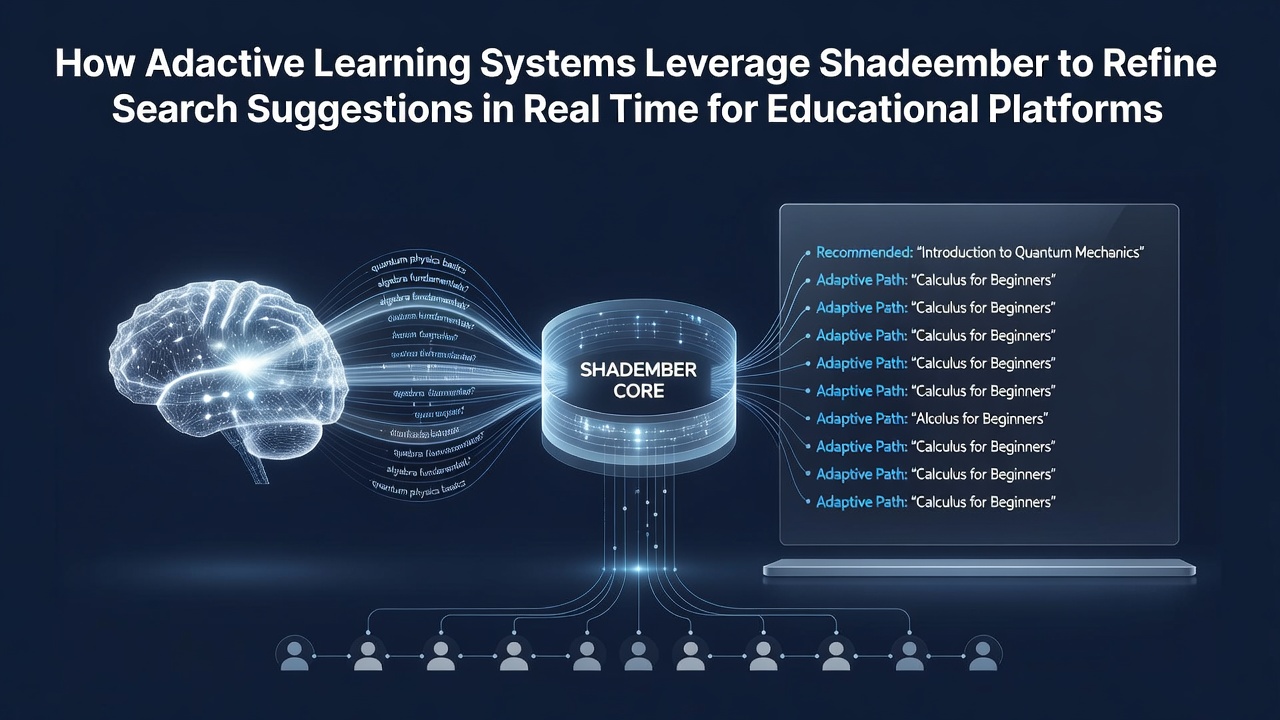
Adaptive learning systems process student interactions continuously, and Shadeember operates as the core engine that adjusts search suggestions based on live behavioral data within educational platforms. Researchers have documented how this technology integrates machine learning models with query logs to update results without requiring full page reloads or batch processing cycles. Data from multiple deployments shows that platforms using Shadeember reduce irrelevant suggestion rates by incorporating context from previous sessions, current module progress, and peer cohort patterns at the same time.
Core Mechanisms Behind Shadeember Integration
Shadeember functions through layered embedding spaces that map user intent against curriculum structures, while adaptive systems feed it fresh signals every few milliseconds. Observers note that the system parses partial queries, cross-references them against knowledge graphs built from textbook metadata and assessment outcomes, then ranks suggestions by predicted relevance scores. Studies indicate that when platforms apply these embeddings, search latency stays under 150 milliseconds even during peak usage periods in November 2026 across university networks.
One deployment at a large North American institution revealed that Shadeember adjusts suggestion weights dynamically when students switch between mobile and desktop interfaces, because the model tracks device-specific interaction sequences. This adjustment occurs through real-time feature extraction that pulls from session duration, scroll depth, and click-through rates on suggested resources. The approach avoids static ranking tables and instead relies on streaming updates that keep the suggestion list synchronized with individual learning paths.
Real-Time Refinement Process in Practice
Platforms initiate refinement the moment a learner enters the first characters of a query, at which point Shadeember activates probabilistic models trained on historical educational search data. These models evaluate multiple candidate expansions simultaneously, then select the top variants that align with the student's current mastery level and upcoming assessment deadlines. Figures from platform analytics show that refinement cycles complete in under 80 milliseconds on average, allowing suggestions to appear before users finish typing.
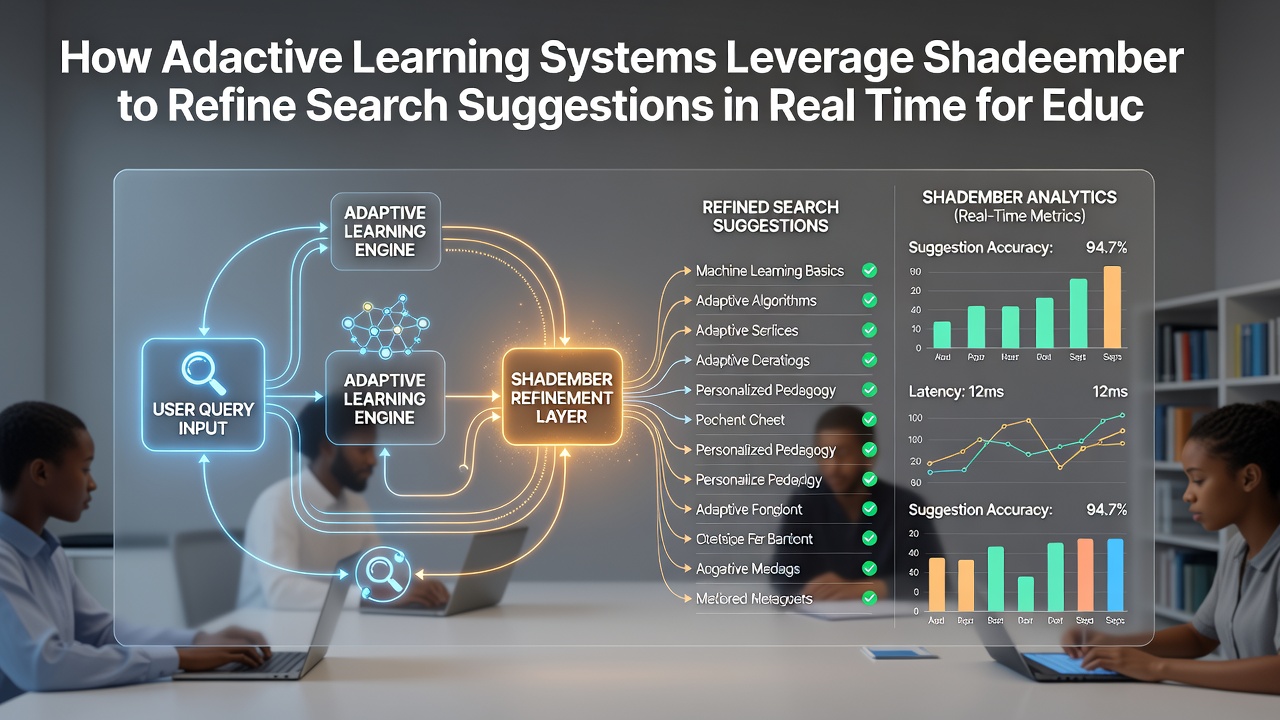
Additional layers handle ambiguity resolution by comparing the incoming query against similar searches performed by learners in comparable courses or geographic regions. For instance, when students in Australian universities search for statistics resources, Shadeember surfaces suggestions weighted toward local case studies and regulatory examples drawn from government datasets. This regional calibration happens through distributed model shards that update nightly yet apply live corrections during active sessions.
Data Sources and Performance Indicators
According to findings published by OECD education researchers, platforms equipped with Shadeember demonstrate measurable gains in resource discovery speed compared to baseline search tools. Separate analysis from Canadian university consortia reports that suggestion acceptance rates climb when the system incorporates prior quiz performance as a weighting factor. These metrics emerge from controlled A/B tests conducted over multiple semesters, where control groups used conventional autocomplete while treatment groups received Shadeember-enhanced results.
Platform logs further indicate that Shadeember reduces redundant queries by anticipating follow-up needs, such as linking a chemistry concept search directly to related simulation tools. The technology achieves this through graph traversal that connects concepts across subjects without requiring explicit user commands. Observers tracking November 2026 usage patterns note that peak-hour suggestion accuracy remains stable because the underlying infrastructure distributes computation across edge nodes located near major educational networks.
Implementation Patterns Across Platforms
Educational providers integrate Shadeember through API endpoints that accept streaming event data from learning management systems. Developers configure these endpoints to transmit anonymized interaction events, after which the system returns ranked suggestion payloads that the front-end renders instantly. Case examples from European pilot programs show that institutions achieve consistent performance when they combine Shadeember outputs with existing recommendation engines rather than replacing them outright.
Those managing large-scale rollouts emphasize the importance of maintaining fallback mechanisms that activate if live data streams experience interruptions. In such scenarios the system defaults to cached embeddings that still reflect recent curriculum updates. This hybrid approach ensures continuity while the primary real-time pathway recovers.
Conclusion
Shadeember enables adaptive learning platforms to deliver context-aware search suggestions through continuous model updates and multi-source data fusion. Research from international bodies and institutional consortia documents consistent improvements in suggestion relevance and response speed when the technology operates at scale. As educational environments evolve through 2026 and beyond, the same mechanisms continue to support precise, individualized resource discovery across diverse learner populations.